
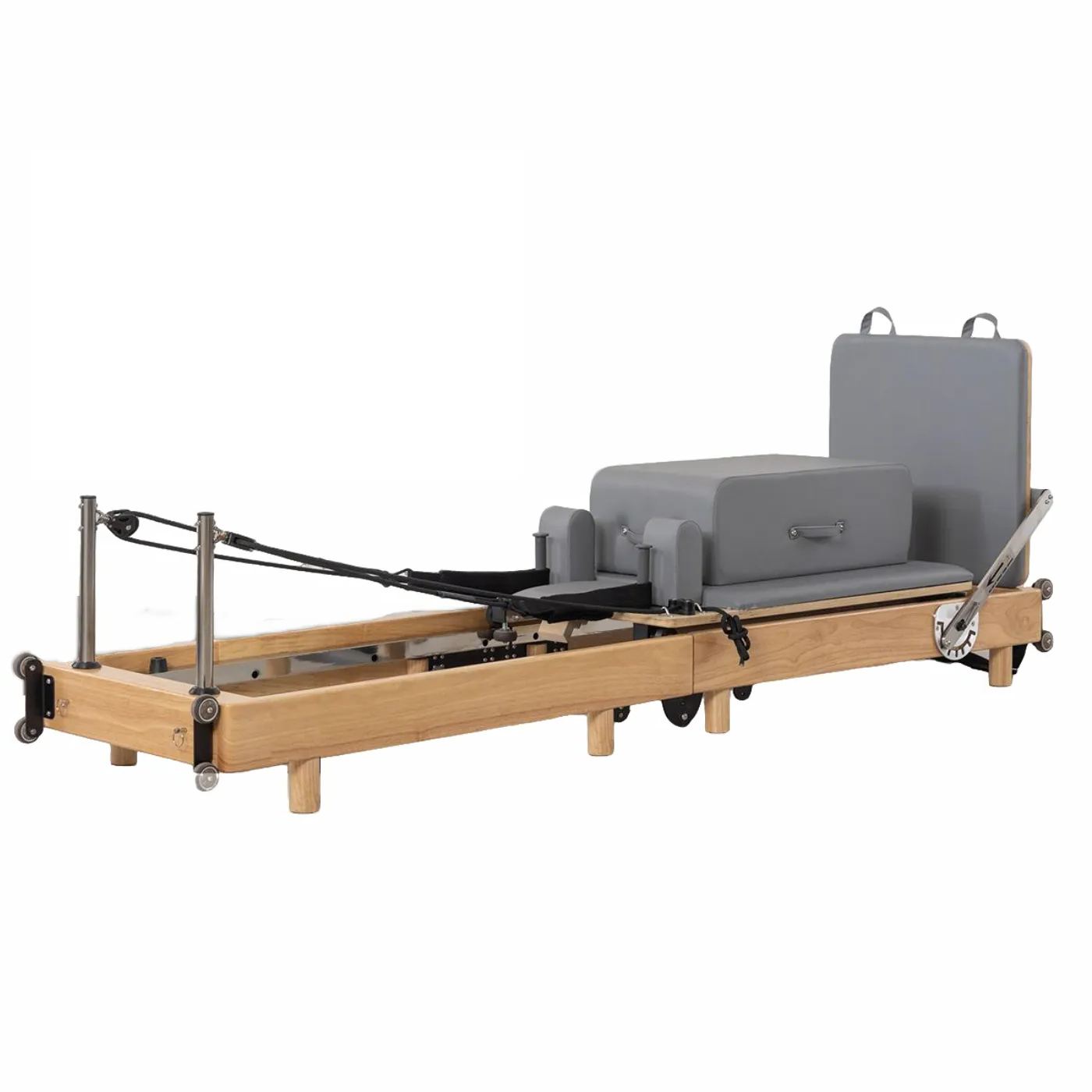
.png?w=1400&h=1400)
.png?w=1200&h=1200)
.png?w=1000&h=1000)
.png?w=1400&h=1400)
.jpeg?w=800&h=800)
.jpeg?w=800&h=800)
-0.jpeg?w=800&h=800)
Maintenance
Maintenance Guidelines & Safety Inspection
JuSai Pilates equipment is built to provide long-lasting satisfaction. However, the safety and functionality of the equipment can only be ensured through regular inspections for any signs of damage or wear. Your safety, as well as that of your clients, depends on following a consistent maintenance routine and using the equipment correctly.
This guide serves as a reference to help you properly maintain your equipment and keep it in the best condition for both safety and enjoyment. Failure to adhere to these maintenance recommendations could lead to malfunctions, potentially causing serious injury.
To ensure the optimal performance of your Jusai Sports equipment, it is essential to follow the guidelines outlined below.
Daily Maintenance
| Upholstery | Clean all upholstery on your JuSai Pilates equipment with a soft cloth and a mild non-abrasive cleaner. |
| Safe Working Area | Ensure there is a safe working area of at least 60cm around the equipment, including space for emergency dismounts. Shared spaces are allowed for adjacent equipment. |
| Runners | Clean the rails with a damp, soft cloth and a window cleaner. Avoid using lubricants on the rails, as they will attract dust and dirt, which can negatively affect the ride quality. |
| Springs | Inspect all springs for signs of wear, such as deformation, kinks, gaps, or corrosion. Any springs showing damage should not be used and must be replaced immediately. |
| Ropes & Handles | Check the rope system to ensure that the ropes are securely attached and that the rope adjustment system is properly engaged and locked. Ensure the shoulder rests are fully seated on the carriage bed. |
| Shoulder Rests | Removable shoulder rests should be locked in place using the locking pins under the carriage. |
Weekly Maintenance
| Fasteners: Nuts & Bolts |
Ensure that all nuts, bolts, and locking pins are securely tightened. Verify that the pulley wheel bolts are tightly fastened and make sure the eyelet bolt connecting the pulley to the rope riser is not loose.
|
| Footbar | Make sure all bolts are tightened and the foot bar is securely fixed in position. Always ensure the locking pin is in place when using the foot bar. |
| Rope Mechanism: Handles/Straps |
|
| Spring Bar | Check for proper operation. Ensure that all hooks are tightly secured and that there is no damage to either stopper. |
| Wheels & Rollers | Clean the wheels and inspect them for any damage; replace them if needed. Sit on the carriage and check for smoothness, paying attention to any unusual sounds – the ride should be quiet and smooth. Keep in mind that dirt on the wheels and tracks, even in small amounts, can affect the performance. |
| Springs |
Examine all springs for any signs of wear, such as deformation, kinks, gaps, or corrosion. Any springs showing damage should not be used and must be replaced immediately. Ensure that the spring retaining bungee cord is properly in place.
|
| Eyelets & Spring Clips | Manually check that all eyelets on the risers and spring bar are secure and cannot rotate. Replace any eyelets that are loose, as they may have thread damage. |
| Feet | Check to make sure all feet are firmly attached and that the reformer is stable and level. |
Monthly & Annual Maintenance
| Springs | It is recommended to rotate springs of the same strength to promote more even wear. Springs that have been used for 3,000 hours or have been in operation for 2 years should be replaced. |
| Wheels/Rollers | Replace all carriage wheels that have been used for 1 year. |
More Information
| Expendable items | Parts like ropes, straps, and handles should be replaced when they begin to show signs of wear, fatigue, or fraying. |
| Lubricants | Avoid using lubricants on the rails, as they will attract dust and dirt, which can negatively affect the ride quality. |
| Adjusting nuts and Bolts | Inspect and tighten bolts by hand—if you can turn nuts, bolts, or eyelets, they are too loose. Be cautious not to overtighten, as it could damage the threads. |
| Securing the Carriage | Always leave at least two springs attached to the carriage when not in use, and ensure they are in a neutral position with minimal tension. |
| Equipment not in use | Do not modify the equipment or use unauthorized parts, as this could void your warranty. Ensure that equipment taken out of service is not accessible or usable while out of operation. |
| Maximum user weight capacity | Please note the maximum user weight of each products. |