.png?w=1400&h=1400)
.png?w=1200&h=1200)
.png?w=1000&h=1000)
.png?w=1400&h=1400)
.jpeg?w=800&h=800)
.jpeg?w=800&h=800)
-0.jpeg?w=800&h=800)
I. The Great Cardio Debate
For anyone who’s ever wondered, “Should I buy a treadmill or a stair climber?” you’re not alone.
Both promise strong cardio, both can live in your home gym, and both can transform your fitness — but they serve different lifestyles.
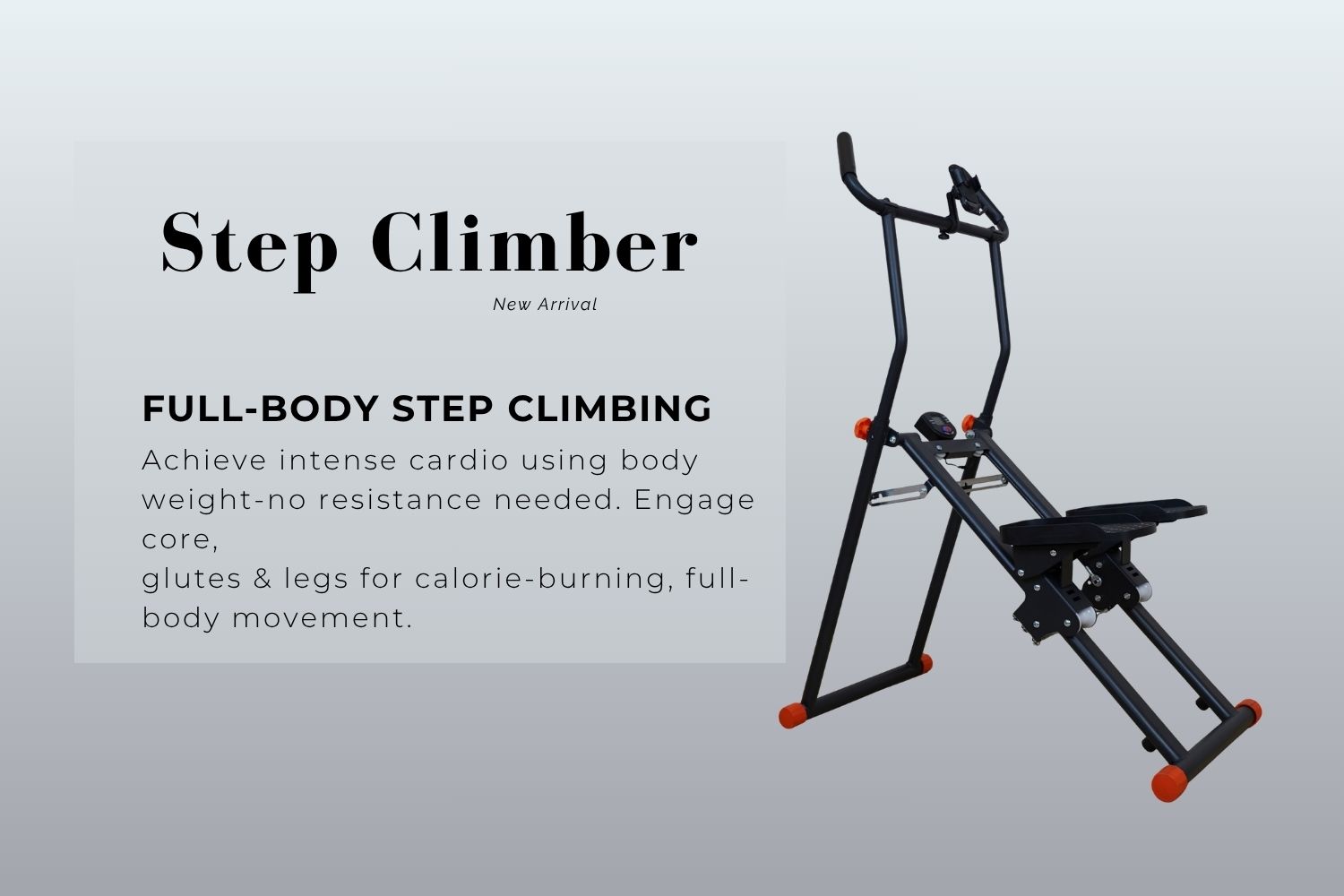
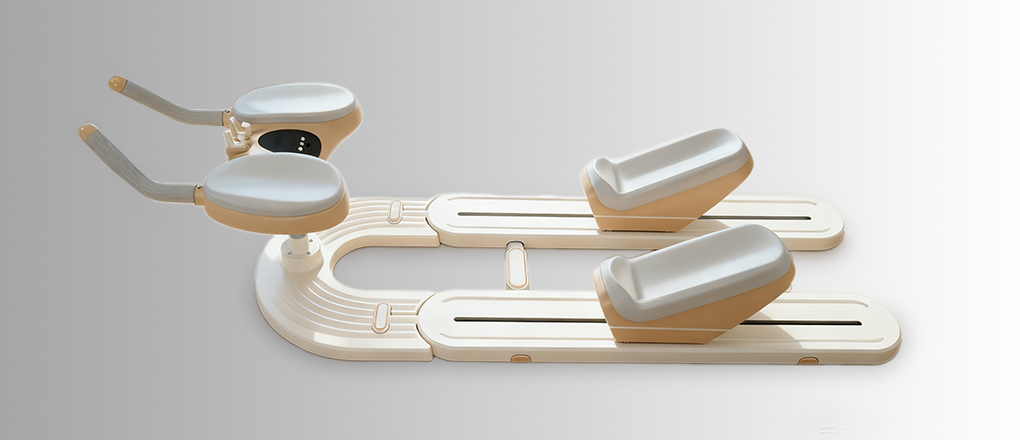
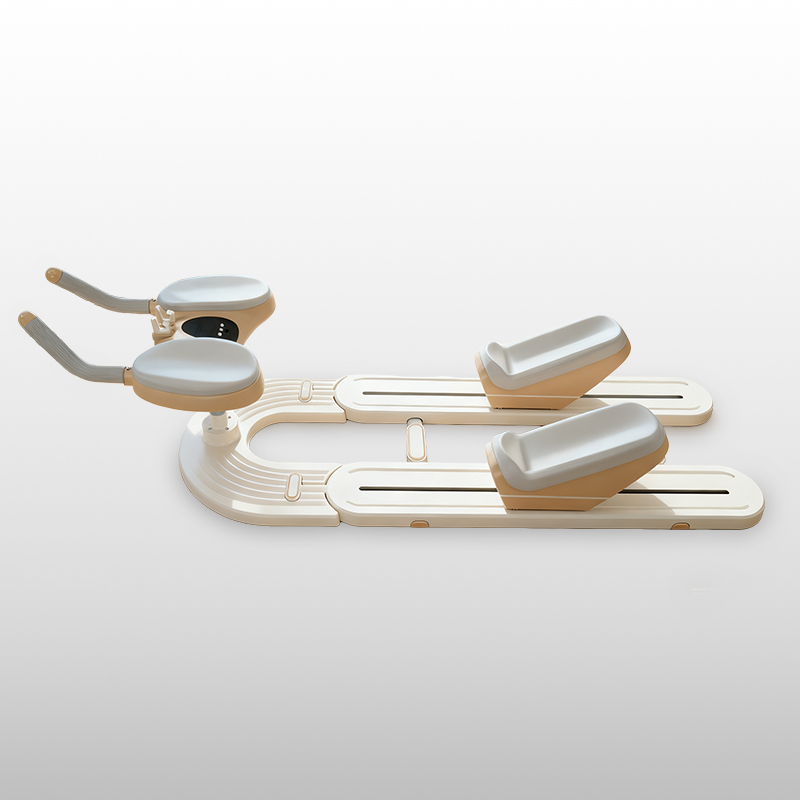
If your space feels tight or your schedule tighter, the home stair climber has quietly become the smarter, more compact alternative.
It delivers the same heart-pumping challenge as a treadmill while taking up a fraction of the space and putting far less stress on your joints.
In this guide, we’ll break down how each machine works, what results you can expect, and—most importantly—how to choose the one that truly fits your goals and your home.
II. Key Differences at a Glance
Let’s start with a quick snapshot before diving deeper.
| Feature | Home Stair Climber | Treadmill |
|---|---|---|
| Space & Storage | Compact, foldable, easy to move | Bulky, requires permanent space |
| Impact Level | Low-impact on joints | High-impact (especially knees) |
| Muscle Activation | Full-body (legs, glutes, core) | Primarily legs |
| Noise Level | Quiet hydraulic system | Motor noise + foot impact |
| Calories per Minute | High (engages more muscles) | Moderate (steady pace) |
| Maintenance | Minimal — no belt or motor | Frequent lubrication & belt care |
| Electricity Use | None | Continuous power draw |
| Setup Time | 5 minutes or less | 30 – 60 minutes |
If you live in an apartment, share walls, or simply want a clutter-free setup, that first row alone makes the choice clear.
III. Why the Stair Climber Deserves More Attention
Most of us grew up seeing treadmills as the symbol of home fitness.
But fitness is evolving — people want efficient, sustainable, joint-friendly solutions that actually fit real homes.
1. A Compact Cardio Machine for Modern Living
Your workout space shouldn’t fight for room with your sofa.
A foldable stair climber stores upright or flat, freeing up precious square footage while still delivering serious cardio power.
2. Full-Body Activation in Less Time
Unlike treadmills, where movement stays mostly in the legs, a stair climber engages your glutes, thighs, calves, and core.
Every step drives strength and balance while keeping your heart rate high — a true full-body cardio experience.
3. Adjustable Resistance for Every Level
Turn the dial, feel the difference.
Whether you’re warming up or chasing that end-of-workday burn, adjustable resistance helps you progress without boredom or plateau.
4. Low-Impact, High-Reward
Climbing works the body, not against it.
The movement is smooth and natural, protecting knees and ankles while torching calories — a smart option for long-term joint health.
5. Built to Last — and to Fit Your Life
No cords, no motors, no noise.
Just durable steel, non-slip pedals, and ergonomic handles designed for comfort and stability.
IV. The Treadmill: Pros and Cons to Consider
The treadmill isn’t obsolete — it just serves a different kind of user.
Pros
-
Familiarity: Walking and running feel natural.
-
Speed Control: Precise pace and distance metrics.
-
Versatility: Can support HIIT sprints or long endurance sessions.
Cons
-
Space Demand: Most models require 6–8 feet of clear floor space.
-
Noise: Motor hum + foot impact = neighbor complaints.
-
Impact Stress: High forces on knees and hips over time.
-
Maintenance: Belts, motors, and lubrication cost both time and money.
-
Energy Use: Continuous electricity consumption adds to bills.
A treadmill can still shine for runners training indoors, but for most home users focused on balanced fitness in limited space, the stair climber wins on practicality.
V. Which Is Better for Weight Loss?
When it comes to burning calories, both machines deliver results — but the way they do it is different.
-
Treadmill workouts rely on steady, repetitive movement. You can walk, jog, or run at a set pace for 30 minutes, which builds endurance but can feel monotonous.
-
Stair climber workouts, on the other hand, create natural interval training. Every climb uses more muscle fibers, demands greater effort, and spikes heart rate quickly — meaning you burn more calories in less time.
A moderate 20-minute stair-climbing session can equal or surpass a 30-minute treadmill jog in total energy expenditure.
Plus, by engaging your core and glutes, you keep burning calories long after your workout ends — the so-called afterburn effect.
If your goal is efficient fat loss and muscle toning, the stair climber stands on higher ground.
VI. Which Is Better for Small-Space Living?
Here’s where the home stair climber truly takes the crown.
Modern apartments weren’t built for treadmills. Between the bulky footprint, electrical cords, and constant vibration, a treadmill often feels like an unwanted roommate.
A foldable stair climber, on the other hand, disappears when you’re done. Store it upright behind a door or slide it under a bed — no rearranging furniture required.
This compact footprint also encourages consistency: when your equipment fits your life, you’re far more likely to use it daily.
No commute, no setup, no excuses. Just climb and go.
VII. The Health Perspective: Joints, Muscles, and Longevity
Sustainability in fitness isn’t just about how long a machine lasts — it’s about how long you can keep moving pain-free.
The stair climber’s motion is low-impact and joint-friendly. Each step mimics a natural gait, engaging stabilizer muscles that protect knees and hips.
Over time, that means fewer aches, better posture, and stronger balance.
By contrast, high-impact treadmill running repeatedly loads the same joints.
It’s great for building stamina but can lead to overuse injuries if not balanced with recovery or strength work.
If you want a machine that supports longevity — allowing you to stay active for years — the stair climber is the smarter investment.
VIII. Final Verdict: Choose What Fits Your Life
Let’s be honest: there’s no single “best” cardio machine — only the one that fits your lifestyle, space, and goals.
Choose a treadmill if:
-
You love running or power walking.
-
You have ample space and prefer long endurance sessions.
Choose a home stair climber if:
-
You live in a compact space.
-
You want efficient, full-body cardio in less time.
-
You value low-impact movement that’s gentle on joints.
-
You appreciate quiet, foldable, maintenance-free equipment.
In short, the treadmill is about distance.
The stair climber is about elevation — in your heart rate, your strength, and your everyday energy.
Every fitness journey starts with a single step — sometimes, it’s quite literal.
A home stair climber isn’t just another gadget; it’s a statement that your health can fit your space, your schedule, and your life.
With its space-saving design, adjustable resistance, and full-body cardio benefits, it proves that efficiency and effectiveness can coexist.
Whether you climb for ten minutes before breakfast or squeeze in a session after work, those small efforts compound into lasting change.
So, before you settle for a treadmill that dominates your living room, consider the alternative that empowers you to move freely.
.png?w=1400&h=1400)
.jpeg?w=1400&h=1400)
.jpeg?w=4000&h=4000)
.jpeg?w=4000&h=4000)
.jpeg?w=2560&h=2560)
.jpeg?w=800&h=800)
.jpeg?w=743&h=743)