
.png?w=1400&h=1400)
.png?w=1200&h=1200)
.png?w=1000&h=1000)
.png?w=1400&h=1400)
.jpeg?w=800&h=800)
.jpeg?w=800&h=800)
-0.jpeg?w=800&h=800)
Introduction: I received many comments about how to buy the spine stretch corrector, click here to get the one for your home.
Lower-back stiffness, reduced spinal rotation, and daily neck/shoulder tension are epidemic among desk workers, parents, and active adults. While stretching and mobility exercises help, many people struggle to perform them correctly or consistently. The Spine Twist & Stretch Trainer is designed to bridge that gap: a compact, guided device that supports safe lumbar rotation, reduces disc pressure, and helps users build a daily spinal mobility habit.
This guide explains: why spinal rotation matters, how the trainer works, step-by-step routines (beginner → advanced), expected benefits, safety notes, and how to integrate this device into your daily wellness routine.
Why Spinal Mobility Matters (and why we lose it)
Your spine is built to move in three planes: flexion/extension, lateral flexion (side bend), and rotation. Modern life limits especially rotation and lateral mobility:
-
Prolonged sitting locks the pelvis and hips.
-
Repetitive forward posture shortens anterior chain muscles.
-
Poor diaphragm/breathing patterns reduce thoracic mobility.
-
Sedentary lifestyles weaken stabilizing deep muscles (multifidus, TVA).
Consequences include:
-
Reduced torso rotation and functional reach
-
Increased lumbar disc loading and stiffness
-
Compensatory tension in glutes, QL, hamstrings
-
Greater injury risk during everyday movements
Restoring spinal rotation improves posture, reduces localized tension, enhances functional movement, and can reduce perceived back pain when done safely and consistently.
What the Spine Twist & Stretch Trainer Is (and what it isn’t)
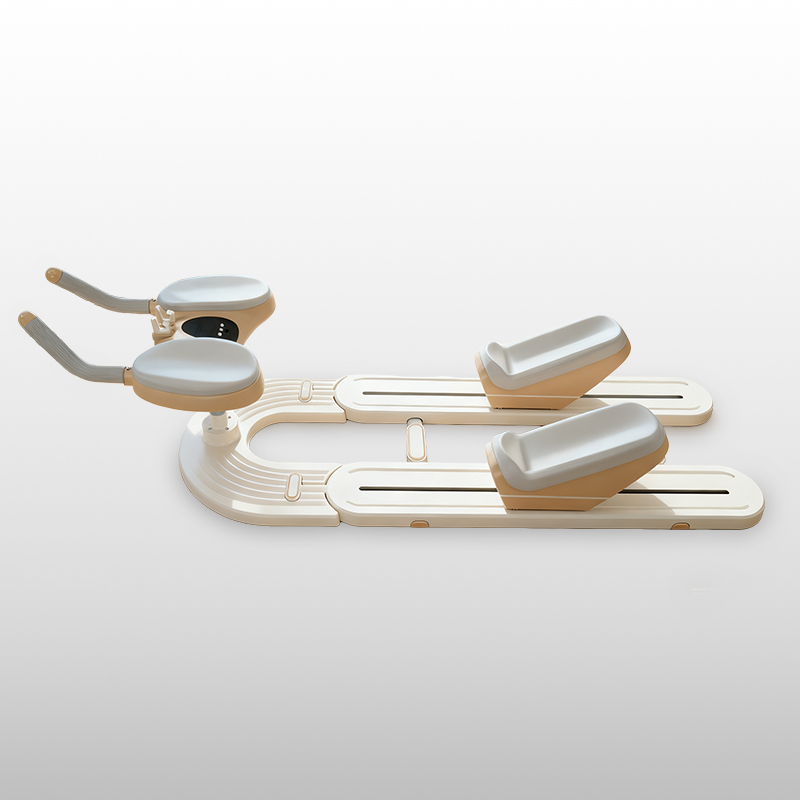
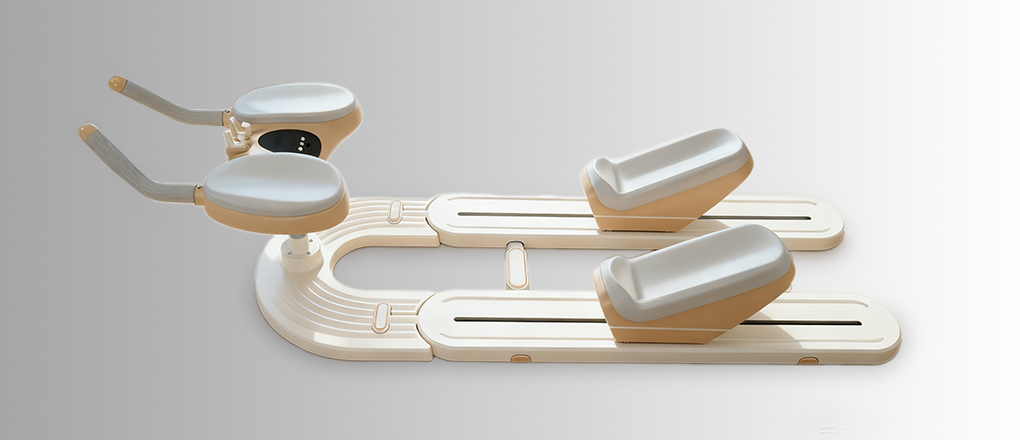
The Spine Twist & Stretch Trainer is a home-use lumbar mobility tool engineered for guided twisting motion. Key features (from the product page) include:
-
ABS panel + steel frame construction for stability.
-
Padded knee/elbow supports for comfort.
-
Anti-slip base and ergonomic handles for secure use.
-
Built-in digital timer and hidden phone holder for guided sessions.
-
Compact dimensions and detachable design for easy storage.
-
Maximum load ~100 kg (220 lbs).
This is not a medical device that treats severe pathology—rather, it’s a mobility and maintenance tool that helps everyday users and mild rehab clients perform safer rotational stretches under support. Users with acute or serious spinal conditions should consult a healthcare professional before use.
How the Trainer Works: mechanics & benefits
Guided rotation with support
The device stabilizes the lower body (knees/pelvis) while allowing controlled upper-torso rotation. This creates a safe lever and range that:
-
Redistributes compressive forces across vertebrae (gentle decompression effect).
-
Activates deep stabilizers (multifidus, TVA) through supported movement.
-
Promotes thoracic rotation and counter-balances forward-posture habits.
-
Reduces guarding in overactive lumbar muscles.
Low-impact, repeatable practice
Because the movement is supported and cushioned, users can perform short daily sessions with low reinjury risk, encouraging adherence and progressive improvement.
Who benefits most from this trainer?
Ideal users
-
Desk workers with chronic stiffness or limited rotation.
-
Postural imbalance sufferers (rounded shoulders, forward head).
-
Older adults needing gentle mobility work.
-
Pilates/yoga practitioners wanting extra thoracic rotation training.
-
People seeking daily maintenance for back comfort.
Not recommended (without medical clearance)
-
People with recent spinal fracture, severe osteoporosis, unstable herniations, acute radiculopathy, or certain post-surgical states.
-
If you experience sharp radiating pain, numbness, or progressive neurological signs—stop and seek professional advice.
Safe Use: positioning, breath, and movement cues
Positioning
-
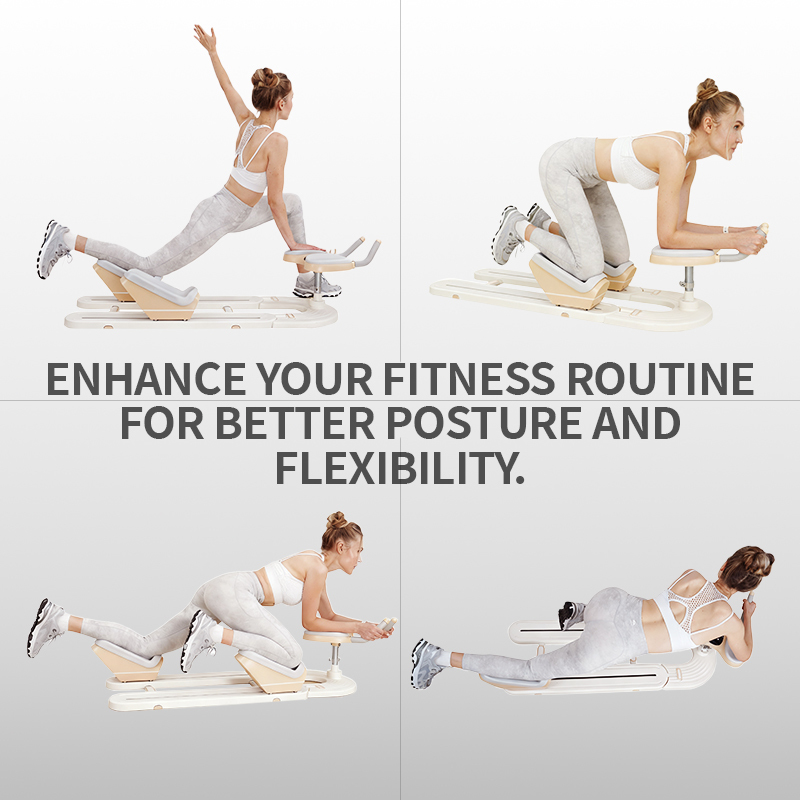
Kneel on the padded base, knees aligned with support.
-
Place forearms/hands on the support pads or grips as the design instructs.
-
Keep pelvis square and neutral—avoid excessive anterior tilt.
-
Use the phone holder to follow guided videos if available.
Breathing
-
Inhale to prepare, exhale as you rotate—use diaphragmatic breath to allow ribcage movement.
-
Slow, controlled breathing reduces muscular guarding and enhances rotation.
Movement cues
-
Initiate rotation from thorax/chest, not by forcing the lower back.
-
Move slowly, aiming for control over range.
-
Stop if you feel sharp pain or tingling.
-
Aim for symmetry—same reps/holds both sides.
Beginner Routine (5–10 minutes daily)
This routine is designed to be safe for most users and to build consistency.
Warm-up (1–2 min)
-
Gentle cat/cow or standing thoracic side bends to wake the spine.
Main set (5–7 min)
-
Supported gentle twists — 2 sets × 30–45 seconds per side. Slow rotation in a pain-free range.
-
Hold stretches — 2 holds × 10–20 seconds each side at the end-range you can hold comfortably.
-
Controlled return — 5 slow repetitions returning to center with diaphragmatic breaths.
Cool-down (1 min)
-
Slow breathing, gentle hip circles.
Frequency: daily or 5x/week. Progress when movement feels easy and symmetric.
Intermediate Routine (10–15 minutes)
Add dynamic control and increased time under tension.
Warm-up (2 min)
-
Dynamic thoracic rotations standing or prone “windmills.”
Main set (8–10 min)
-
Timed intervals — Use the trainer’s timer: 40 sec work / 20 sec rest × 8 rounds (alternate sides each round).
-
End-range holds — 3 holds × 20–30 sec per side with long exhale.
Accessory
-
Add 1–2 minutes of prone bridges or dead-bug core activation to reinforce stability.
Frequency: 4–5×/week.
Advanced Routine (15–25 minutes)
Incorporate controlled loading, movement patterns, and breathing cadence for mobility + neuromuscular control.
Warm-up (3 min)
-
Thoracic rotations with band or broomstick for full shoulder-chest engagement.
Main set (12–18 min)
-
Progressive rotation tempo — 3 sets: slow (6 reps each side), moderate (10 reps), controlled fast (20 reps, but not ballistic).
-
Loaded twist (isometric) — Hold at end-range and perform light isometric abdominal bracing for 10–15 sec.
-
Combined movement — Add gentle contralateral limb reach (if safe) to challenge coordination.
Finish
-
2–3 min breathing & mobility for relaxation.
Note: Advanced users should still prioritize control and avoid jerky, forced rotations.
Expected Timeline & Outcomes
With consistent use (5–6 min/day to 15–20 min several times/week), users commonly report:
-
Within 1 week: reduced stiffness, easier turning during daily activities.
-
2–4 weeks: improved rotation range, less morning stiffness, better posture awareness.
-
6–8 weeks: sustained mobility gains, improved core engagement, reduction in non-specific low-back ache.
Outcomes depend on baseline mobility, adherence, and any coexisting spinal pathology.
Common Mistakes & How to Avoid Them
Mistake 1: Forcing range
-
Don’t push beyond comfortable end-range. Use progressive overload.
Mistake 2: Holding breath
-
Keep steady exhale during rotation to reduce muscular guarding.
Mistake 3: Over-rotating pelvis
-
Keep pelvis stable — rotation should come from thorax.
Mistake 4: Skipping core activation
-
Combine trainer sessions with brief core work to reinforce neuromuscular control.
Mistake 5: Using without clearance when needed
-
If you have diagnosed disc herniation, radicular symptoms, severe spinal stenosis, recent surgery—check with clinician first.
Integrating the Trainer into a Full-Body Routine
This trainer works best as a mobility/complement tool—pair it with:
-
Daily walks or light cardio for circulation.
-
Core stability exercises (dead bug, bird-dog, planks).
-
Hip mobility drills (90/90 stretches, hip flexor lengthening).
-
Glute activation (bridges, clams) to support pelvic mechanics.
A sample weekly plan:
-
Mon: Trainer (10 min) + 20 min walk
-
Tue: Trainer (6 min) + core 10 min
-
Wed: Trainer (10 min) + light resistance training
-
Thu: Mobility flow + Trainer (6 min)
-
Fri: Trainer (15 min) + walk
-
Sat: Active rest (yoga/walk)
-
Sun: Rest or light mobility
Real-World Testimonials & Use Cases
-
Office worker: “10 minutes before lunch helped me turn my head better and my afternoons feel less tight.”
-
Pilates student: “Great for targeted thoracic rotation prep before sessions.”
-
Older adult: “Gentle and secure — I can rotate more without pain.”
(If you have customer stories/UGC, include video/photo demonstrations for conversion.)
Buying & Maintenance Tips
Buying Tips
-
Confirm dimensions (124 × 45.5 × 32 cm) fit your storage space.
-
Max load ~100 kg — suitable for most users; if you need higher capacity, consider alternatives.
-
Look for clear assembly instructions and a product manual.
-
Check return/warranty policy (the page lists 30-day returns and store policies).
Maintenance
-
Wipe pads after use; keep hinges/rails free of debris.
-
Inspect screws and frame monthly.
-
Store in a dry area to protect ABS and pads.
Safety Disclaimer
This guide provides general information and routines for mobility and wellness. It does not replace medical advice. If you have serious back conditions, neurological symptoms, or recent surgery, consult a healthcare professional before using the Spine Twist & Stretch Trainer.
Make Spinal Mobility a Daily Habit
The Spine Twist & Stretch Trainer is a practical, easy-to-use tool designed to make spinal rotation safe, repeatable, and effective at home. For people suffering from stiffness, limited rotation, or seeking a preventive mobility routine, it can become a daily habit that supports posture, reduces tension, and improves movement quality.
If your goal is lasting back comfort—not a quick fix—this device helps you build the consistent, supported practice needed to keep your spine moving well for years to come.
.png?w=1400&h=1400)
.jpeg?w=1400&h=1400)
.jpeg?w=4000&h=4000)
.jpeg?w=4000&h=4000)
.jpeg?w=2560&h=2560)
.jpeg?w=800&h=800)
.jpeg?w=743&h=743)
comments