.png?w=1400&h=1400)
.png?w=1200&h=1200)
.png?w=1000&h=1000)
.png?w=1400&h=1400)
.jpeg?w=800&h=800)
.jpeg?w=800&h=800)
-0.jpeg?w=800&h=800)
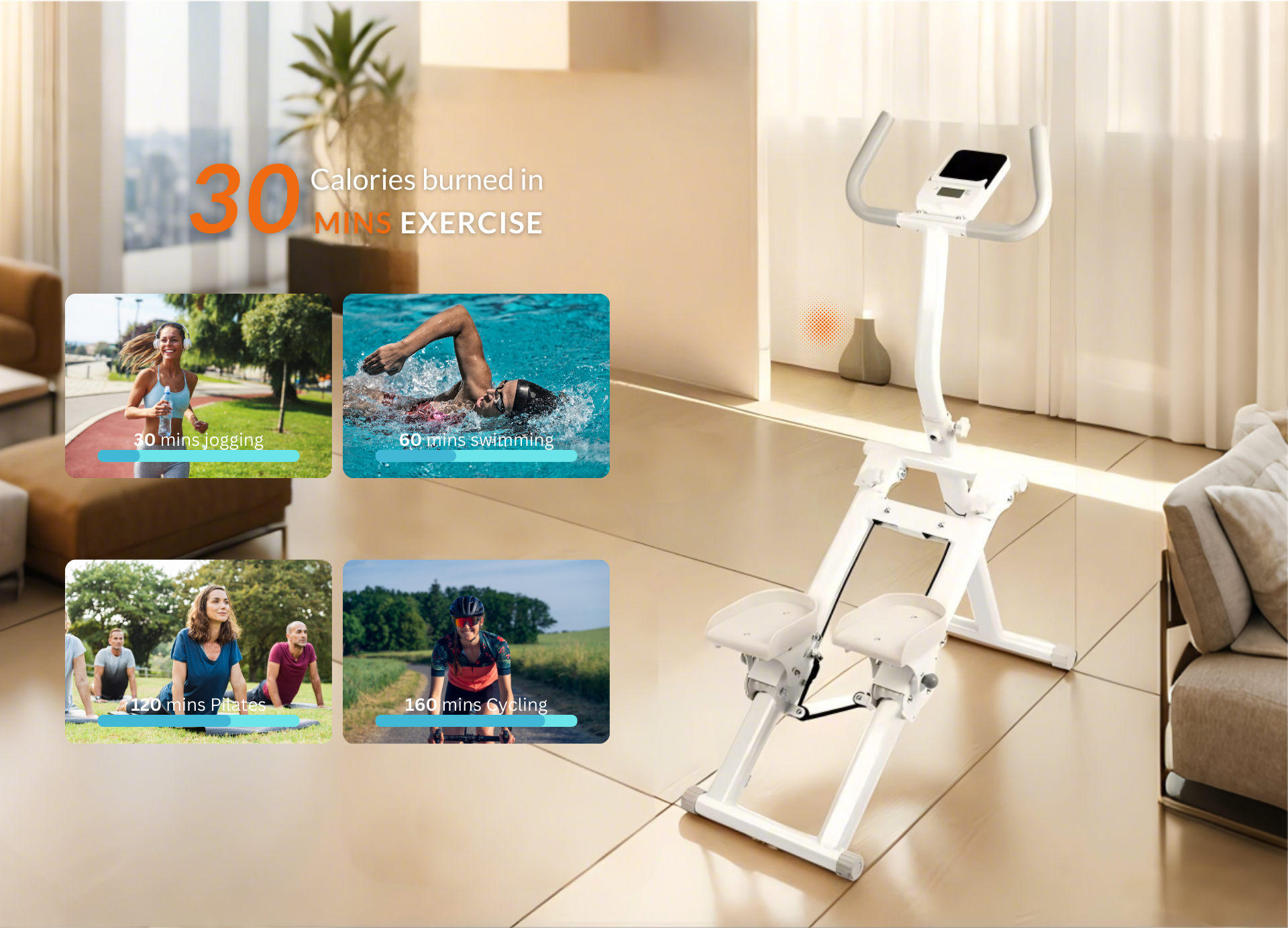
Want Shapelier Glutes? Ditch the Treadmill
Why the Stair Climber Builds Beautiful Legs and Glutes
- Glute Activation in Every Step: Each climb forces your glute max (the largest muscle in your backside) to fire to extend your hip — the exact movement needed for that “lifted” shape. A study in the Journal of Electromyography and Kinesiology found stair climbing activates glute muscles 40% more than standard squats.
- Time Under Tension: Slow, controlled steps keep your quads, hamstrings, and glutes under constant tension — a key driver for muscle tone. Even 15 minutes of focused climbing delivers more targeted muscle work than an hour of casual walking.
- Posterior Chain Focus: It hones in on your “backside muscles” (glutes, hamstrings, and lower back), which are often neglected in forward-motion cardio. A strong posterior chain = a perky, balanced backside.
- Joint-Friendly Progression: Unlike outdoor stair sprints (which can jar knees), the machine’s smooth, adjustable resistance lets you increase intensity gradually — so you can build strength without pain.
A Glute-Focused Weekly Workout Plan (Adjust for Your Level)
Day 1: Glute HIIT (Burn + Activate)
- Warm-up: 5 mins easy climb (Level 3–4) + 10 bodyweight glute bridges (squeeze at the top for 2 seconds)
- Workout: 12 rounds of:
- 40 sec “power climb” (Level 7–8 for intermediates; Level 5–6 for beginners): Drive through your heels, squeeze glutes at the top of each step.
- 20 sec “active rest” (Level 4): Keep moving, but focus on relaxing tight hips.
- Cool-down: 5 mins slow climb (Level 2–3) + foam roll glutes (30 sec/side)
Day 2: Lateral & Pulse Training (Target Side Glutes)
- Warm-up: 3 mins hip circles (1 min each direction) + 2 mins slow climb (Level 3)
- Workout:
- Side steps: 3 mins/side (Level 4). Face sideways, step with your lead leg, and press through your heel to pull your body up. Keep hips squared — no twisting! This targets the glute medius, which fills out the sides of your hips.
- Pulse steps: 4 rounds of 1 min on/30 sec off (Level 5). Drop into a shallow squat (knees over ankles), then take tiny, fast steps. Focus on “pulsing” from your glutes — imagine squeezing a marble between your cheeks.
- Finisher: 5 mins steady climb (Level 5–6) with extra-long steps: Let your heel touch first, then roll through to your toes to stretch and engage glutes fully.
Day 3: Strength Training (Build the Base)
- Barbell Hip Thrusts: 4x12 (use a weight that makes the last 2 reps tough). Rest your upper back on a bench, feet flat, and drive hips up until your body forms a straight line. Squeeze glutes at the top for 2 seconds.
- Bulgarian Split Squats: 3x10/leg (hold dumbbells). Step back onto a bench, lower until front knee is 90 degrees, then push through your front heel to rise — this mimics stair climbing motion.
- Clamshells: 3x15/side (add a resistance band above knees). Lie on your side, knees bent, and lift top knee like opening a clamshell — targets the glute medius (hello, side butt!).
- Glute Bridges: 1 set to failure (aim for 25+ reps). Lie on your back, feet flat, and lift hips until shoulders, hips, and knees align. Squeeze hard at the top.
Day 4: Weighted Climber (Grow + Define)
- Warm-up: 5 mins climb (Level 3–4) + 10 weighted glute bridges (hold a dumbbell on your hips)
- Workout: 25 mins steady climb (Level 5–6 for intermediates; Level 4 for beginners)
- Use a 5–10 lb weighted vest, or hold 2–5 lb dumbbells at your sides (avoid swinging!).
- Focus: Keep hands off rails (or light grip only). For every step, think: “Heel first, squeeze glutes, then lower slowly.”
- Cool-down: 5 mins stretching (pigeon pose for glutes, 1 min/side; standing quad stretch, 30 sec/leg)
|
Cue
|
What It Does
|
Common Mistake
|
|
Drive through your heel
|
Shifts work from quads to glutes
|
Stepping on your toes = quad dominance (bye-bye, glute growth)
|
|
Slight hip hinge (not full lean)
|
Stretches glutes before contraction, increasing range of motion
|
Over-leaning = lower back strain (and lazy glutes)
|
|
Hands off rails
|
Forces core and glutes to stabilize your torso
|
White-knuckling rails = 20% less glute engagement
|
|
Step height = 80% of your max
|
Longer steps = more hip extension = bigger glute squeeze
|
Tiny steps = minimal muscle activation
|
Pro Variations to Keep Glutes Growing
- Reverse steps: Climb backward (hold rails lightly for balance) — hits hamstrings and glutes from a new angle. Do 1 min forward, 1 min reverse for 10 mins.
- Elevated toes: Place toes on the front edge of the pedal (heels hanging slightly) — increases stretch on glutes during each step.
- Resistance band around knees: Add a light band above knees during steady climbs — forces glutes to work harder to keep knees from caving inward.
Nutrition for Sculpting: Fuel to Grow, Not Shrink
- Protein: Aim for 1.6–2.2g per kg of body weight daily (e.g., 70kg = 112–154g). Prioritize: chicken, eggs, Greek yogurt, lentils (vegan), or tofu. Protein repairs and builds muscle.
- Carbs for energy: Eat complex carbs (oats, sweet potatoes) 1–2 hours before workouts for fuel. Post-workout, pair carbs + protein (e.g., apple + peanut butter) to replenish and repair.
- Healthy fats: Avocado, nuts, and olive oil support hormone production (critical for muscle growth). Add 1/4 avocado to 2 meals/day.
- Calories: If you want bigger glutes, eat a small surplus (100–200 calories/day). If you want to tone and lose fat, stay in a 100–200 calorie deficit (focus on protein to preserve muscle).
Recovery: Let Glutes Grow
- Sleep 7–9 hours/night: Growth hormone (key for muscle repair) peaks during deep sleep.
- Stretch post-workout: Pigeon pose (targets glutes), downward dog (stretches hamstrings), and hip flexor stretches (kneel on one knee, push hips forward) — tight hip flexors weaken glutes!
- Foam roll 2x/week: Roll your glutes, quads, and hamstrings to reduce tightness and improve blood flow.
Track Progress: Beyond the Scale
- Photos: Take side/back photos monthly (same time, lighting, pose). You’ll notice a lift before the scale moves.
- Measurements: Track hips (widest part) and thighs — a smaller waist + wider hips = a more sculpted look.
- Strength gains: Can you climb Level 8 for 40 secs now (vs. Level 6 last month)? That’s muscle getting stronger.
A Stair Climber Exercise Equipment For Home Use
.png?w=1042&h=1042)
One of the greatest obstacles to consistent fat-burning is convenience. Driving to the gym, adjusting your schedule, and waiting for equipment can all disrupt your momentum. That’s why having a Stair Climber at home is not just a luxury—it’s a strategy for lasting results.
Unlike bulky treadmills or expensive ellipticals, a compact stair climber machine brings a high-intensity, space-efficient workout into your daily routine. Whether you're in a studio apartment or a suburban home, today's home stair climbers—like the Onewalk model—are designed for real people with real goals.
Benefits of a Home Stair Climber:
Time Efficiency: Burn more calories in 20 minutes than most other machines
Low Footprint: Many models fold up or roll away for easy storage
On-Demand Cardio: No gym hours, no waiting, no excuses
Family Friendly: Multiple resistance levels make it suitable for all fitness levels
Privacy & Comfort: Work out in your PJs, listen to your own music, and skip the crowds
When fat loss and fitness are part of your daily environment—not an errand—you’re far more likely to stay consistent. That consistency is what fuels long-term transformation. A home stair climber isn’t just an exercise machine—it’s a commitment to movement, accessibility, and long-term health.
Whether you’re working from home, raising a family, or just looking for a smarter way to train, the stair climber is a powerhouse tool to have on your side. The climb starts where you are.
.png?w=1400&h=1400)
.jpeg?w=1400&h=1400)
.jpeg?w=4000&h=4000)
.jpeg?w=4000&h=4000)
.jpeg?w=2560&h=2560)
.jpeg?w=800&h=800)
.jpeg?w=743&h=743)