.png?w=1400&h=1400)
.png?w=1200&h=1200)
.png?w=1000&h=1000)
.png?w=1400&h=1400)
.jpeg?w=800&h=800)
.jpeg?w=800&h=800)
-0.jpeg?w=800&h=800)
Introduction
You hop on the stair climber. The steps are smooth, your rhythm feels solid, and you think: “This is fine. I can do this all day.”
Five minutes later? You're dripping sweat, legs trembling, and desperately checking the timer, wondering how two minutes somehow lasted a decade.
If this sounds familiar, you're not alone.
The stair climber is one of the most misunderstood cardio machines. Often underestimated, this machine sneaks up on you with delayed intensity that leaves even seasoned gym-goers questioning their fitness.
But why exactly does it feel easy at first and then so brutally hard?
Let’s explore the full picture—from physiology and psychology to performance tips, long-term benefits, and community feedback from users across the web, including Planet Fitness members on Reddit.
Understanding the Illusion of Ease
The First Few Minutes
When you start using the stair climber, everything feels manageable. The steps rotate beneath your feet, and if you’re moving at a moderate pace, it might seem even too easy. You don’t feel a burn, and your breathing remains steady. But that sensation is deceptive.
What’s really happening inside your body?
Physiological Explanation
-
Oxygen Debt Hasn’t Caught Up Yet
In the first few minutes, your cardiovascular system hasn't fully realized the demand. Your muscles begin accumulating lactic acid, but your brain hasn’t yet registered it as discomfort. -
Muscles Are Fresh, Especially the Lower Body
Your glutes, quads, and hamstrings are powerful, and when rested, they can take on short bouts of exertion quite well. It’s only after sustained work that the fatigue sets in. -
Your Heart Rate Lags at First
While your muscles engage almost instantly, your heart rate takes 1–3 minutes to climb into your cardio zone. That’s why you may feel “fine” initially—until your heart rate spikes and things suddenly feel a lot harder.
Why It Gets Hard — Fast
1. You’re Climbing. Forever.
Unlike walking, running, or biking, there is no “glide” phase in stair climbing. Every step lifts your full body weight against gravity. That constant effort adds up rapidly.
2. Muscle Burn: Large Muscle Groups Fatigue Faster
The stair climber targets:
-
Glutes (especially on deeper steps)
-
Quadriceps (on shallow, fast steps)
-
Hamstrings and calves
-
Core and lower back (stabilizers)
Working these muscle groups simultaneously under load means your energy depletes faster than in many other cardio activities.
3. The Lactic Acid Threshold
Once you surpass your aerobic threshold, your muscles switch to anaerobic energy systems. This leads to:
-
Burning sensation in the thighs and glutes
-
Increased heart rate and breathing difficulty
-
Shorter time to fatigue
4. No Real Breaks
Unless you slow down significantly or stop, there’s no break. Even a “pause” still requires you to stabilize your balance and continue stepping. Compare this to treadmill walking or biking, where your body occasionally gets passive movement.
The Psychological Toll
The Repetitive Nature
The stair climber’s constant up-and-down motion feels repetitive quickly. Unlike running outdoors or even treadmill walking where the scenery changes or you're navigating slight variation, the stair climber can feel like time stands still.
Mental fatigue often hits before muscular fatigue in beginners.
Perceived Exertion vs. Actual Exertion
You might be doing fewer steps per minute than you’d run strides on a treadmill, but your perceived exertion is much higher because of the vertical demand and lack of breaks.
Real-World User Feedback — What the Community Says
From Reddit’s fitness and Planet Fitness communities, here are some authentic experiences:
-
"It’s sneaky. Feels like nothing at first, then boom—you're dying."
-
“At around 5–6 minutes, my legs are toast. It's my favorite cardio now, but it humbled me hard.”
-
“I do 25 minutes every day now, switching between level 4 and level 6. Took me a while to build up to that.”
-
“The stair climber is the only machine where I notice real changes in my leg shape.”
These voices echo a universal truth: it’s tough, but effective—and strangely addictive once you build tolerance.
The Stair Climber vs. Other Cardio Machines
Let’s compare:
| Machine | Impact Level | Muscle Engagement | Calorie Burn Rate | Difficulty Curve |
|---|---|---|---|---|
| Treadmill (walk/run) | Moderate | Low to moderate | Moderate | Linear |
| Elliptical | Low | Moderate | Low to moderate | Flat |
| Stationary Bike | Low | Lower-body focused | Low | Mild |
| Stair Climber | Low impact | High (glutes, quads) | High | Steep |
The stair climber may be low impact, but it delivers high-intensity results for fat loss, muscle endurance, and overall conditioning.
Expert Strategies to Master the Stair Climber
1. Interval Training
Use this to avoid burnout:
-
30 sec fast pace + 1 min slow recovery = 1 round
-
Repeat for 15–20 minutes
-
Try “Tabata-style” (20:10s) for intense fat burn
2. Strength-Training Variations
Add variety to build strength and mobility:
-
Deep slow steps for glute engagement
-
Side steps for inner/outer thighs
-
Backward steps for hamstrings and balance
-
Skip steps (with caution) to hit glutes hard
3. Posture & Core Engagement
-
Don’t lean on the rails
-
Keep chest lifted and core engaged
-
Push through your heels on deeper steps for better glute activation
4. Set Small, Achievable Goals
Beginners:
-
5 minutes at level 3
-
Rest or switch machines
Intermediate:
-
10–15 minutes with level variation
-
Add side steps or intervals
Advanced:
-
20–30 minutes with weight vest or weighted intervals
-
Integrate into HIIT circuits
Long-Term Benefits of the Stair Climber
Fat-Burning Powerhouse
Thanks to the constant effort and large muscle activation, stair climbers can burn:
-
8–12 calories per minute (depending on body weight & effort)
-
That’s 240–360 calories in a 30-minute session—comparable to running
Lower-Body Sculpting
Few cardio machines tone the glutes, hamstrings, and quads like the stair climber. You’ll notice lean muscle development and tighter definition within weeks of consistent use.
Cardiovascular Health
The elevated heart rate and continuous motion improve:
-
VO₂ max
-
Heart and lung capacity
-
Endurance for real-world activities like hiking or climbing stairs
Mental Grit and Discipline
Mastering the stair climber builds psychological resilience. Pushing past the discomfort barrier is a skill that transfers to many areas of life and fitness.
At-Home Stair Climbers — Are They Worth It?
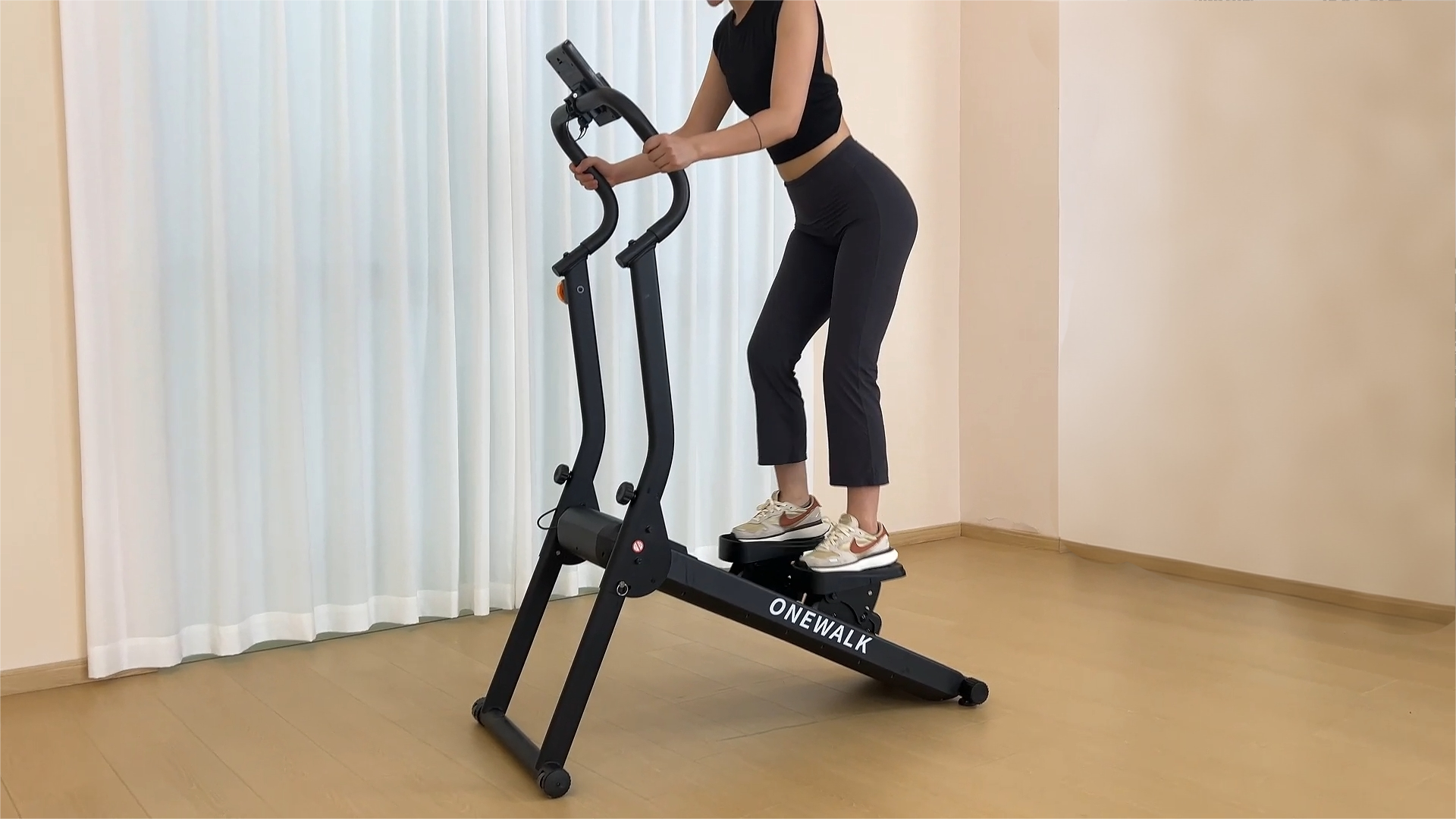
If you're building a home gym or prefer to avoid the commercial gym environment, there are excellent compact stair climber machines available. Brands like Bowflex, Sunny Health & Fitness.
Benefits:
-
Compact footprint
-
Great for daily quick workouts (10–20 min)
-
Affordable cardio option
-
Safe for knees and joints
Final Tips to Conquer the Stair Climber
-
Warm up off-machine (light walk or dynamic stretches)
-
Don’t hold your breath—control your breathing rhythm
-
Use music with a beat to stay motivated
-
Track your progress weekly: floors climbed, calories, endurance
-
Celebrate milestones—first 10 minutes, 100 floors, etc.
The stair climber is one of the most efficient and underestimated machines in the gym. What begins as an “easy cardio warm-up” quickly becomes a full-blown endurance test—physically, mentally, and emotionally.
But the benefits? Worth every step.
If you’re looking for a low-impact, high-result cardio tool that burns fat, sculpts your legs and glutes, and builds endurance, the stair climber is your new best friend.
Just don’t let it fool you at minute one—because by minute five, it’s coming for you.
.png?w=1400&h=1400)
.jpeg?w=1400&h=1400)
.jpeg?w=4000&h=4000)
.jpeg?w=4000&h=4000)
.jpeg?w=2560&h=2560)

.jpeg?w=800&h=800)
.jpeg?w=743&h=743)