.png?w=1400&h=1400)
.png?w=1200&h=1200)
.png?w=1000&h=1000)
.png?w=1400&h=1400)
.jpeg?w=800&h=800)
.jpeg?w=800&h=800)
-0.jpeg?w=800&h=800)
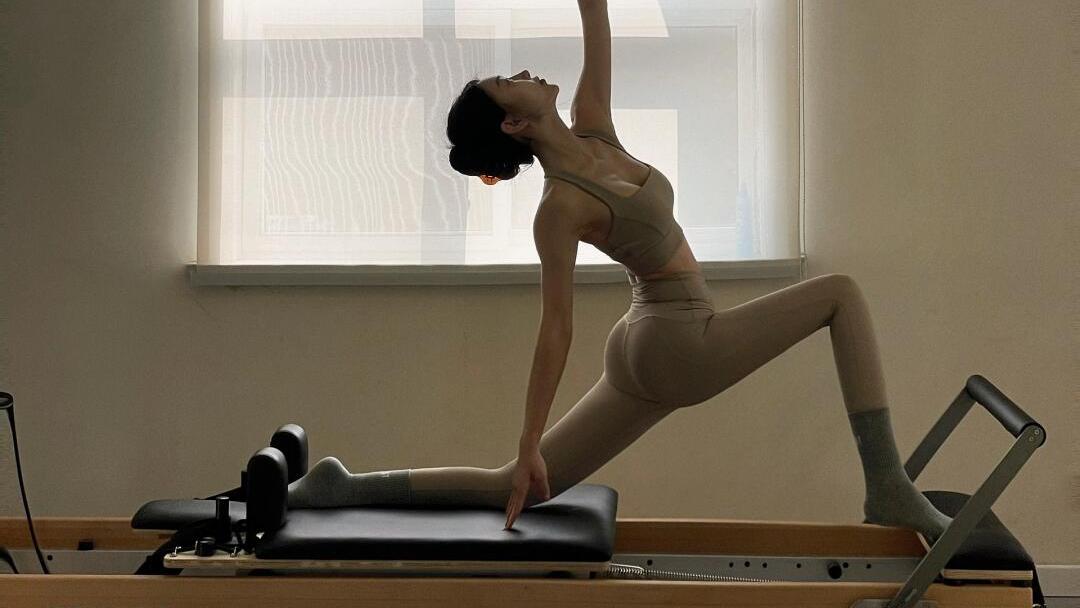
Reformer Pilates has become one of the most popular full-body conditioning methods in modern fitness, known for its ability to sculpt lean muscles, improve posture, strengthen the core, and build mobility—all with low impact on the joints. Because the exercise blends strength, endurance, control, and flexibility training, many people naturally wonder: How many calories does a 45-minute Reformer Pilates session actually burn?
The answer is not a fixed number. Calorie expenditure varies widely based on intensity, spring resistance, body composition, experience level, technique, and the specific style of Reformer routine being performed. But by understanding how the body burns energy during controlled, resistance-based, low-impact movement, you can gain a more accurate—and more meaningful—picture of what happens during a typical 45-minute workout. This comprehensive guide explores calorie burn ranges, the science behind energy expenditure, factors that influence the numbers, and why Reformer Pilates supports sustainable long-term fitness even beyond raw calorie counts.
Before attempting to pinpoint specific numbers, it is important to understand why calorie burn is more difficult to calculate in Pilates than in traditional cardio activities. Unlike running or cycling, where the intensity is steady and measurable, Reformer Pilates relies heavily on neuromuscular precision, controlled eccentric loading, and postural stabilization, all of which engage smaller, deeper muscles that do not always reflect immediately in elevated heart rate. Yet, these muscles are metabolically active and contribute significantly to long-term energy expenditure. Therefore, even though heart rate spikes may not be as high as high-intensity cardio, the total metabolic impact can be meaningful—especially for toning, posture correction, and functional movement.
So how many calories does the average person burn in 45 minutes of Reformer Pilates? Research and user data suggest a broad but reliable range: approximately 200 to 450 calories, depending on intensity.
A beginner-friendly, slow-paced 45-minute class that focuses on fundamentals, breathing, alignment, and low spring resistance tends to burn about 180–260 calories. These sessions emphasize precision and muscular control but are not designed to elevate heart rate extensively. They are ideal for building foundation strength and improving posture.
A moderate-intensity, intermediate-level session tends to burn 250–350 calories in 45 minutes. This level includes more continuous flow, transitions that challenge coordination, and heavier-spring work that increases muscular demand. Most Pilates practitioners fall into this range after a few months of consistent practice.
A high-intensity, advanced-level Reformer session—featuring stronger springs, faster transitions, jumpboard sequences, and continuous movement—may burn 350–450 calories in 45 minutes. Some athletic participants may even exceed this range under exceptional effort, especially when jumpboard work is included, which temporarily transforms the Reformer into a low-impact cardio machine.
However, these numbers tell only part of the story. To understand calorie burn accurately, we need to examine the physiological factors that influence it.
One major factor is body weight and muscle mass. People with higher lean muscle mass burn more calories at rest and during exercise because muscle tissue is metabolically active. A heavier individual will naturally burn more calories than a lighter individual performing the same routine. For example, a 55-kg person may burn 200 calories in a session where a 75-kg person burns over 300.
Another critical factor is exercise intensity, which can vary dramatically in Reformer Pilates. Light springs challenge control and stability, recruiting deep stabilizers. Heavy springs increase resistance, boosting muscular workload. Jumpboard sessions create cardio-like bursts, increasing heart rate and calorie expenditure. A slow, alignment-focused class will differ significantly from a dynamic athletic routine, even if both last 45 minutes.
Experience level also plays a role. Beginners often move slower and hesitate during transitions, leading to lower metabolic output. Intermediate and advanced practitioners move with smoother flow, engage larger muscle groups with better efficiency, and maintain continuous tension, all of which increase calorie burn. Someone who understands how to activate the core deeply and maintain proper alignment will naturally work harder—even if the movement appears smaller or more controlled.
The specific type of routine dramatically changes the calorie equation. A stretch-heavy, restorative session burns far fewer calories than a strength-focused or cardio-jumpboard routine. Some Reformer classes emphasize slow spinal articulation and core precision, while others incorporate glute-intensive sequences, planking series, or standing balance work that elevates heart rate.
Even effort level and mind-body connection impact the numbers. Pilates emphasizes mindful, deliberate activation of muscle groups. When you commit fully to maintaining tension, engaging the core, and executing each movement with precision, calorie burn increases significantly. Simply “going through the motions” produces lower metabolic demand, even with the same exercises.
Despite variations, it is important to understand why Reformer Pilates is considered an effective conditioning method—even if raw calorie numbers appear lower than high-intensity cardio. Pilates builds lean muscle, and lean muscle increases basal metabolic rate (BMR). This means that over time, your body burns more calories even while resting. Reformer Pilates also builds deep-core strength, improves movement efficiency, and reduces chronic tension—all of which encourage more active living outside of workouts.
Additionally, Pilates enhances hormonal balance by reducing stress levels, improving sleep quality, and lowering cortisol. Elevated cortisol is linked to stubborn body fat, especially around the abdomen; therefore, Pilates indirectly supports fat reduction and healthy metabolism.
Another overlooked benefit is the afterburn effect, or excess post-exercise oxygen consumption (EPOC). Strength-focused Reformer sessions, especially those using heavier springs or intense sequences, create small amounts of muscular fatigue that increase calorie burn for hours after the session ends. While Pilates does not produce as high an EPOC as HIIT, the effect is still measurable—particularly in intermediate and advanced sessions.
Considering all of this, the key takeaway becomes clear: A 45-minute Reformer Pilates session typically burns 200–450 calories, but its true value extends far beyond the number displayed on a fitness tracker. Calories are just one piece of a much larger picture. Reformer Pilates creates a foundation of strength, stability, flexibility, and alignment that not only shapes the body but also improves long-term metabolic health.
Ultimately, the question “How many calories does 45 minutes of Reformer Pilates burn?” matters less than the broader impact the workout has on the body. The practice builds sustainable strength, enhances functional movement, and improves muscle balance and posture, all of which contribute to a healthier, more energetic physique. Over time, consistent Reformer practice changes the way your body burns calories throughout the entire day—not only during the session itself. That is the deeper power of Pilates: not just the calories burned in 45 minutes, but the transformation in how your body moves, feels, and performs for life.
.png?w=1400&h=1400)
.jpeg?w=1400&h=1400)
.jpeg?w=4000&h=4000)
.jpeg?w=4000&h=4000)
.jpeg?w=2560&h=2560)

.jpeg?w=800&h=800)
.jpeg?w=743&h=743)